Unit 1 Project 1 · Methods of investigating

Introduction
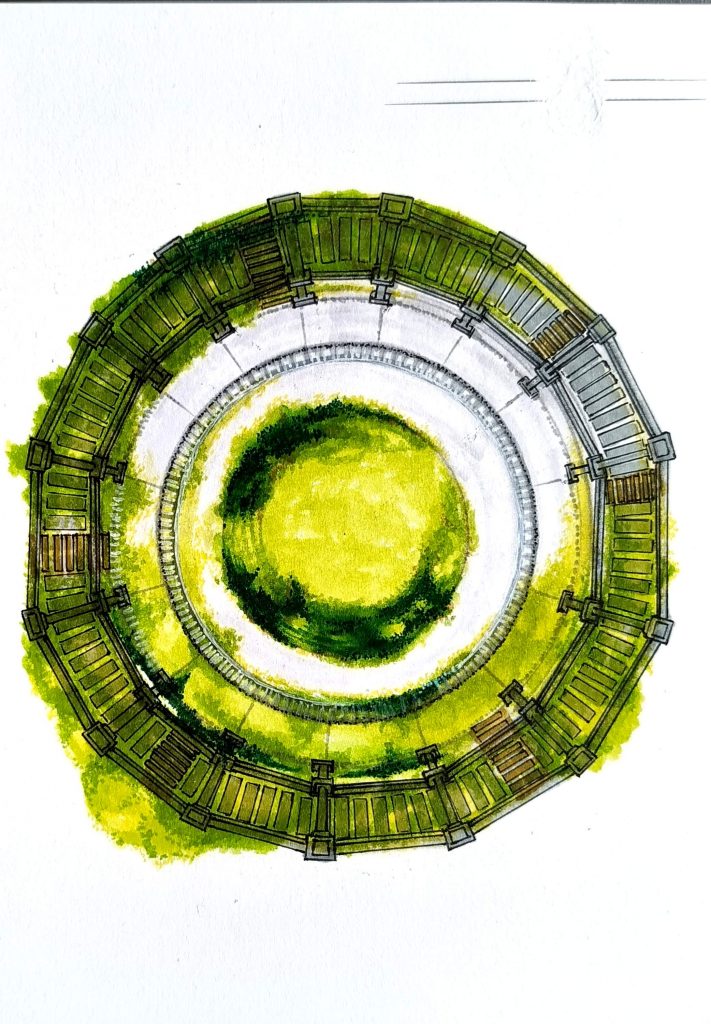
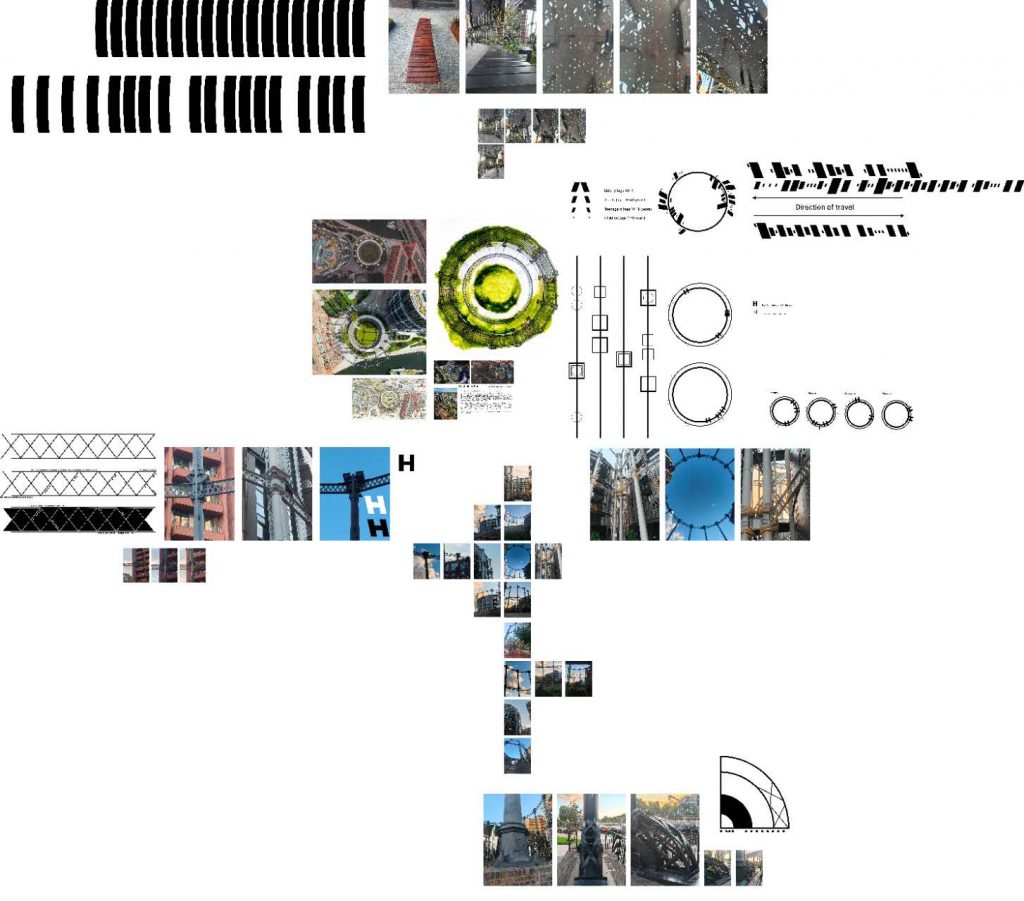
The survey critically evaluates how the reconstructed infrastructure affects human behavior by transforming tourists’ time and physical traces such as age, direction, duration and group composition into a geometric visual language system derived from the industrial buildings in the site. As a systematic and creative method, it explores and records the spatial dynamics of Gasholder Park in London.
Thematically, this study is based on Perec’s concept of “extraordinary”. Perec (1974) believes that streets and blocks are not passive backgrounds, but positive factors in daily life and production, which requires a thorough and almost compulsory observation of the secular. Gasholder Park, as a relic of industrial infrastructure, perfectly embodies the dialectical relationship between historical practicality and contemporary leisure. After completing the survey, I extracted architectural patterns, grids, structures, materials, and digitized human daily behaviors. By drawing these microscopic things, the survey critically evaluated how an industrial “container” was redefined by the time rhythm of its current users. Perec believes that in order to truly understand a place, it is necessary to systematically record the humble and invisible habits of residents (1974, pp. 42–45). Based on this, I used words and dialectograms illustrations to record the duration of people’s loitering in a specific period of time, the sounds generated and the regular behavior of the group, which formed my reflection on Perec’s strict inventory of daily life.
In terms of process, my practice is deeply influenced by Agnès Varda’s documentary methodology of “collection”. In “gleaner and Me”, Varda observes and collects discarded items, neglected details and human traces, and turns short life into tangible archives. Similarly, my process includes “collecting” the spatial behavior of tourists in Gasholder Park. I abstract complex social interaction into geometric repetition (group formation) and linear vector (motion direction). This process should investigate and critically evaluate what has been lost and gained in this abstraction. Just as Varda’s lens re-textualizes the neglected things (Agnès Varda, 2000), in this note, I show that the coding of spatial rhythm system is not only recording, but also actively constructing a new way of “watching” places. It transforms the transient nature of human interaction into an important and methodological file.
Conclusion
By combining Perec’s obsession with unconventional themes and Varda’s process innovation in collecting neglected traces, this study puts forward a strict methodological framework. Visual language system is not only an exquisite performance result, but also a close and key tool to ask about urban spatiality. It proves that the systematic abstraction of human behavior can reveal the hidden social spatial structure, and finally position graphic design as a powerful spatial critical model.
Reference List
Perec, G. (1974) Species of Spaces and Other Pieces. Penguin Books.
The Gleaners and I (2000) Directed by A. Varda. [Documentary film]. Ciné-Tamaris.

Complete Gasholder Park record system report:
Leave a Reply